
// three-way cut
The three piles restack from the chosen pile.
After one pile is chosen, the visible piles recombine in that order. Reusing the cards already on screen keeps the transition from shuffle to selection continuous.
concern → cut → 78-card wheel → save / share
The concern sets the card count. Users shuffle and cut the deck, then pick from a 78-card wheel. I send the question, spread position, orientation, and retrieved card notes to the model. The result can be saved or shared as an image.

The video runs from choosing a question through card reveal and the final interpretation on an actual phone screen.
Watch on YouTubeToday's and monthly readings start immediately. Other concerns ask for one line of text, then open the matching one-, three-, or seven-card spread. Buttons for later steps stay hidden until they are needed.

After one pile is chosen, the visible piles recombine in that order. Reusing the cards already on screen keeps the transition from shuffle to selection continuous.

Users turn the wheel with a finger and tap the card itself; the chosen card lifts out into a selection slot. The wheel keeps the same gesture across one-, three-, and seven-card readings.
I keep shuffle, cut, wheel selection, and reveal as separate states. Moving cards are copies of the source cards, and a watchdog removes any layer left behind by an interrupted animation.
Generating a poster only after the share tap can outlive the mobile gesture window. A size-limited Blob is prepared as soon as the result is ready, so sharing starts immediately.
The first user gesture unlocks the AudioContext, while per-action playback and duplicate suppression are managed independently. Shuffle and reveal feedback remains reliable on iOS.
The model receives the question, spread position, card orientation, and retrieved tarot notes. Duplicate search results are merged before generation, and the response rules focus on current choices and possible next actions.
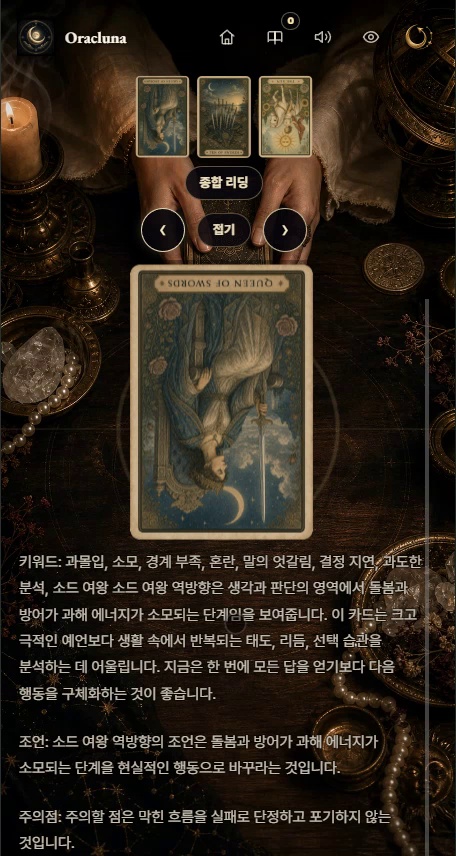
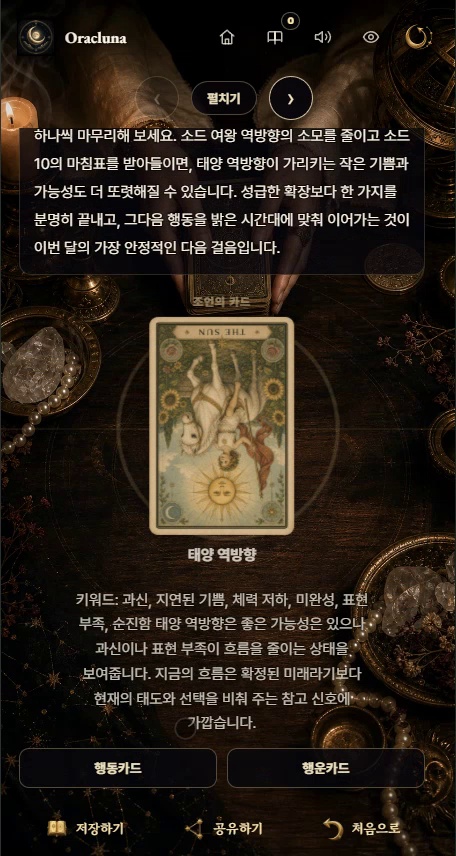
I store readings in the browser, render a Canvas poster, and pass it to Web Share. The Node server validates requests, limits request rates, caches static files, and exposes a health endpoint behind Docker and a NAS reverse proxy.
78 png · 78 svg · 78 metadata · data validation · api/ui smoke test